
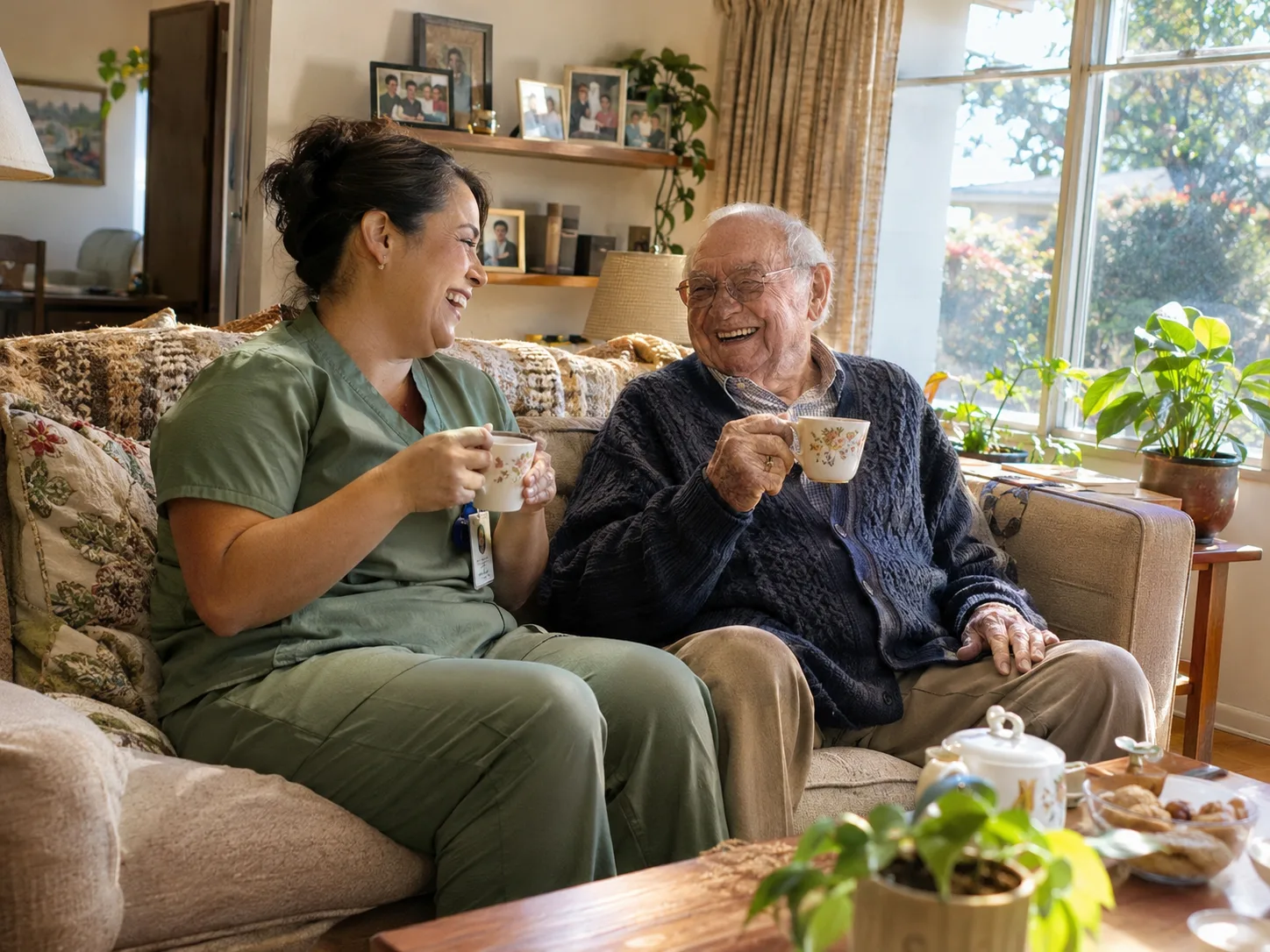
Questions about menus, dining choices and everyday routines that help you assess whether a senior living community could feel comfortable.
In this guide
- Explore the everyday arrangements
- Separate preference from a clinical requirement
- Consider the whole routine
- Use a visit to clarify details
- Continue exploring
Meals are part of the daily experience of a home. They can also reveal how a community handles preferences, choice and communication.
When comparing senior living options, look beyond a photograph of the dining room. Ask how the meal service works for the person who would live there.
Explore the everyday arrangements
Request a current sample menu and ask how often it changes. Discuss meal times, alternatives, snacks, guests and what happens when someone does not want to join a group meal.
Ask whether residents can give feedback and how that feedback reaches the person responsible. The important question is not whether every wish can be fulfilled, but whether the process is clear and respectful.
Separate preference from a clinical requirement
Favorite foods, cultural traditions and preferred meal times are useful to discuss. Allergies, swallowing concerns and prescribed dietary requirements need appropriate professional guidance and direct confirmation from the provider about what it can safely support.
Do not treat a general statement such as “we accommodate diets” as an individualized answer. Ask who will assess a requirement and how the agreed arrangement is communicated.
Consider the whole routine
Someone who enjoys breakfast quietly may want a different daily rhythm from someone who likes a busy communal table. Ask about the connection between meals, medication arrangements handled by qualified staff, activities and rest, without assuming the same schedule suits everyone.
Use a visit to clarify details
If the community offers a suitable opportunity to experience a meal, ask how that can be arranged. Observe the environment and ask the older adult what feels comfortable. A single visit is a snapshot, so follow up on anything important rather than assuming it represents every day.
Record confirmed arrangements beside any additional costs or conditions. A good fit should make room for familiar pleasures while meeting the person’s actual support needs.